Brush Clearance and Home Hardening
Preparing your property to survive wildfire
If you live in the Wildland Urban Interface, you have a 40% chance of your home being destroyed in a wildfire. If you take the steps to harden your home and create defensible space, you can reduce those odds by half.
A note about fire hardening your property.
Fire hardening your property can feel overwhelming, both financially and in terms of scope. Instead of trying to do everything at once, create a three-year plan and approach the work in phases. Tackling it step by step helps you stay motivated! Doing nothing is the most dangerous thing we can do.
We’re here to guide you and help develop a plan to fire harden your property that works for you.
1. Clear vegetation and items that can ignite within 5 feet of your home - Sometimes referred to as Zone Zero, this is perhaps the single most important thing you can do to protect your home. The five feet around your house is the most vulnerable to embers and embers are the number one method of fire transmission.
2. Replace mulch with non-combustable alternatives - Many of us enjoy natural-looking wood chips in our flowerbeds, gardens, and planters next to our house. As you can imagine, these are extremely susceptible to ignition from embers. Swap it out for decomposed granite, gravel, pebbles, or some other non-combustible alternative.
3. Install gutter guards or clean your gutters regularly - gutters are one of the primary places where leaf litter, pine needles, etc. collect providing an excellent place for ignition in a fire. Clean your gutters out regularly and especially when red flag days are predicted. For a lower maintenance option, install gutter guards. Product suggestions are below.
4. Seal gaps and cracks in your roof, siding and foundation - embers can penetrate a home's exterior in an area as small as 2 millimeters (0.078 inches). Take the time to look at your home's perimeter and seal any cracks with the proper caulking and roofing products.
5. Cover foundation vents and attic spaces with 1/8" mesh screening - One of the number one ways fire spread from home to home in the Palisades fire of 2025 was through the attic vents. Embers enter through these areas easily. Often, before the homeowner is even aware the entire roof is engulfed in flames. 1/8" or finer metal mesh will help keep embers out of the interior of your home thus reducing the chance of ignition. Product recommendations are below.
6. Move flammable items away from structures - This ties into item 1. Storing items, keeping potted plants, or placing furniture within five feet of your home greatly increases the risk of ignition during a wildfire. When a red flag day is predicted, move these items to outside of the 5' perimeter around your home.
7. Trim tree branches overhanging the roof - Tree branches should be cut at a minimum of 6 feet above the overhang of your house. Tree to Structure fire spread is not as common as ember to structure fire spread, however, branches can catch fire and if they are within 6 feet of your home, you are greatly increasing the possibility for ignition to your home. Additionally, trees that regularly produce leaf litter, pine needles, or any other type of droppings can collect on your rooftop and provide an ignition point in the event of fire.
8. Replace or repair damaged weatherstripping - Weatherstripping in your home works to keep out moisture, insects and embers in the event of a fire. If you have worn out or damaged weatherstripping, it provides opportunity for embers to create an ignition point in your home during a fire. Make sure to inspect and replace all weatherstripping around your house, including the weatherstripping at the bottom of your garage door.
9. Use metal mesh covers on chimneys - Metal mesh is required in most VHFHSV areas in Los Angeles. Just remember if it's big enough to let embers in, high wind events can push those embers into the more vulnerable parts of the interior of your home, providing an opportunity for home ignition.
10. Install hose bibs or fire-resistant hoses at all corners - If fire approaches your home, and there is time before evacuation, watering down the vulnerable areas of the exterior of your home can go a long way towards preventing ember ignition. Take the time now to install hose bibs and fire resistant hoses at every corner of your home in order to make for easy deployment before an evacuation order.
Understanding defensible space and how it pertains to your home and property will allow you to know what brush clearance and home hardening projects are needed to help your property survive wildfire.
Defensible Space
Defensible space is the buffer zone that property owners create around a building to protect it from wildfire. The practice involves careful landscaping and vegetation management to remove flammable material and reduce a fire's intensity as it nears a structure. Maintaining defensible space is one of the most effective ways homeowners can increase their property's chance of surviving a wildfire.

Zone 0 extends zero to 5 feet from structures, including the building itself.
Zone 1 begins five feet from your house and extends 30 feet away.
Zone 2 lies beyond the home defense zone, extending at least 100 feet from the house or to your property line.
Zone 3 is adjacent to roads and driveways, fourteen feet overhead and ten feet from the edge of the roadway.
Zone 4 is area shared with neighbors and/or land management agencies. 100-200+ ft.
Zone 0: Ember Resistant Zone
Zone 0, sometimes referred to as the 'Ember Resistant Zone,' extends 0 to 5 feet from your house. It is the area closest to your house, including plants, decks, outdoor furniture, and the outside walls and coverings. This area is the most vulnerable and should be more aggressively maintained for fire resistance. When wildfire embers land in this area, they ignite any combustible material, which in turn can ignite your home. Gravel mulch and hardscaping are very effective in this area.
How to prepare this area for fire:
-
Clean roofs and gutters of dead leaves, debris and pine needles that could catch embers.
-
Replace or repair any loose or missing shingles or roof tiles to prevent ember penetration.
-
Reduce the ability for embers to pass through vents in the eaves by installing 1/8 inch metal mesh screening.
-
Clean debris from exterior attic vents and install 1/8 inch metal mesh screening.

-
Repair or replace damaged or loose window screens and any broken windows. Screen or box-in areas below patios and decks with wire mesh to prevent debris and combustible materials from accumulating.
-
Move any flammable material away from wall exteriors – mulch, flammable plants, leaves and needles, firewood piles – anything that can burn. Remove anything stored underneath decks or eaves.
Zone 1: 5-30ft. Lean, Clean & Green

In this zone, which extends from 5 to 30 feet from the home, remove dead vegetation and debris, and maintain spacing between shrubs and trees. Remove 'ladder fuels' (i.e., trees or shrubs that are growing under other trees) because they can increase the probability of fire moving into the tree canopy. Keep vegetation in this zone irrigated. Hardscape and plant islands or beds can help maintain horizontal separation to reduce the spread of fire.
Steps to take in Zone 1
-
Clear vegetation from under large stationary propane tanks.
-
Create fuel breaks with driveways, walkways/paths, patios, and decks.
-
Keep lawns and native grasses mowed to a height of four inches.
-
Remove ladder fuels (vegetation under trees) so a surface fire cannot reach the crowns. Prune trees up to six to ten feet from the ground; for shorter trees do not exceed 1/3 of the overall tree height.
-
Space trees to have a minimum of eighteen feet between crowns with the distance increasing with the percentage of slope.
-
Tree placement should be planned to ensure the mature canopy is no closer than ten feet to the edge of the structure.
-
Tree and shrubs in this zone should be limited to small clusters of a few each to break up the continuity of the vegetation across the landscape.
Most of us in the Hollywood Hills do not have property that extends beyond Zone 1. Our neighbors then become our Zones 2-4 in relation to our home. How they maintain their homes and property will determine how resilient we all are to wildfire.

Home Hardening
The process of retrofitting or building a house with ignition-resistant materials and using specialized construction techniques to increase its resilience against embers, radiant heat, and direct flame contact. The goal is to make the home less vulnerable to ignition, especially from the wind-blown embers that cause the majority of structure losses during wildfires.
90% of homes burned by wildfire are ignited by embers. To understand how to protect your homes against these embers, we must first learn how embers lead to ignition on a home.
95% of homes within the WUI in Los Angeles are over 20 years old. Newer building standards require many of the buiding upgrades we're going to talk about in terms of home hardening. For those of us that have these older homes, we are looking at retrofitting our existing home and upgrading them to be more fire hardened. Let's get into what that means.
Home Hardening: The Basics
Create a Non-Combustible Zone (Zone 0)
-
Clear vegetation:
Remove all dry leaves, needles, weeds, and dead plants from your roof, gutters, decks, and within 5 feet of your home.
The needles both on the roof and the gutters
on this home will surely ignite during an ember
storm creating fire exposure that will ignite
the entire roof. Regulary, and especially when
red flag days are predicted, cleaning out debris
from roofs and in gutters is your number one
defense against your home igniting from fire.


Clay tile roofs can allow for space for debris to collect providing a space for ember ingnition which can lead to your roof catching fire. Make sure to clear your roof of debris regularly and especially when red flag days are predicted. Mortar in between these spaces on a clay tile roof can be a more permanent solution.
-
Use hardscaping:
-
Replace combustible materials like mulch and bark with gravel, pavers, or concrete in this zone.
-
Bark is highly combustible. If you like the look of bark mulch,
-
there are plenty of rock options that look like bark.

-
Remove debris:
Keep the area under your deck and around your home free of combustible materials, such as furniture and firewood.
If you keep firewood on your property, make sure it is
well away from zone 0. On red flag days, make sure you move
furniture or potted plants away from the 5 feet of defensible space
around your house. Keep the area under your deck completely
clear of combustible material. This deck will surely catch fire in
an ember storm.

Protect Vents and Foundations
-
Cover attic, soffit, and foundation vents with 1/8-inch metal mesh or smaller to block embers from entering.
In the Palisades and Eaton fires, one of the primary
methods of fire transmission was from house to house.
A burning house can create 100' high ember casts.
These embers travel with the wind and find their way into
the foundation and attic spaces of homes. If you don't
have 1/8" mesh or smaller installed on your attic and
foundation vents, embers will lead to your home igniting
and being consumed by fire. Often, attic fires aren't
detected until it's too late to save the structure.

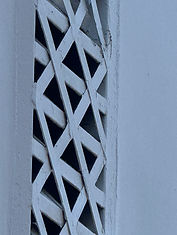
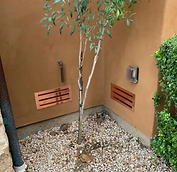

Installing Vents like these are a great way to prevent ember intrusion into your foundation spaces. At the very least, 1/8" mesh or smaller is needed.
Seal and enclose your foundation with noncombustible materials to prevent embers from getting underneath the home.
Maintain Your Roof and Gutters
-
Regularly clean your roof and gutters of leaves and needles to prevent them from igniting from wind-blown embers.
-
Consider installing a Class A fire-rated roof, such as asphalt, metal, or tile, to create a more fire-resistant barrier.
Class A roofing is required if your roof has been replaced in the last 20 years, however, some homes with wooden shake roofs are still grandfathered in. A class a Roof is your number one method of preventing ignition from an ember storm. Class A roofs can be made of asphalt, slate, metal, or clay tiles. Clay tiles with the popular "S" shape can allow debris to collect in and around the tiles and require more diligence in keeping them clear of debris.


Secure Attached Structures
-
Replace combustible wood fencing or gates attached to your home with noncombustible materials for the first 8 feet.
If you have a wooden fence, even if it is well maintained, replace the 8 feet of fencing where it connect to your home with non-combustible materials. This can be metal, but there are plenty of wood looking materials that could blend well with your wooden fence. A wooden fence attached to your home is a gauranteed way to transmit fire to your home especially when the fence goes underneath the eaves of your home.
In this example, two wooden fences are directly under the eaves of the home and come right against the wooden siding of this home. If the fence ignites, the house will burn if it is not put out before the fire transfers to the siding.


This fence is not maintained, is next to dry brush and goes all the way under the eaves of the house. Fire will spread to the structure if the fence ignites.
Limit clutter around your home:
Reduce combustible items, such as outdoor furniture, storage items and planters, around your home
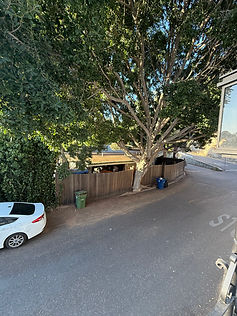
Using the side of your house as storage is not recommended. All of those items will surely ignite in an ember storm, transferring fire to the side and roof of the home. Coupled with leaf litter in the gutter and overgrown vegetation up against a wooden fence, there is not much chance of survival for this home in an ember storm.

Maintain your home
If the exterior of your home is made of wood, it is imperative to to keep up on it's maintenance. Unmaintained wood dries out, leaves gaps where it connects to your home and becomes a home for insects and fire.


This home has wooden siding that is not properly maintained. It also has a wooden deck that needs repair or replacement and dead vegetation leaning against that deck. Coupled with pine needles on the roof, there is very little to protect this home in the event of fire.
This home has some beautiful woodwork outlining the front of it. It has been left in disrepair allowing vegetation to grow behind trim pieces and opening up the home to vulnerability during a fire.


This Calfire Demonstration is a great example of why fire hardening is so important. Simple things like defensible space, and the need for non-combustible materials within that defensible space are shown with clarity as they light these two structures on fire.
Retrofitting Older Homes
Especially in our neighborhoods, there are many homes built more than 20 years ago. Building codes and standards were much different than they are now. Retrofitting older homes for fire can be an expensive endevour. I encourage you to take it step by step and try not to get bogged down in the scope of work that needs to be done. Start with the simple things and then parse out the bigger projects over time.
Class A roofing
As discussed above, a Class A fire rated roof is your first line of defense in a fire. It is not only required when you go to replace your roof, it is your best chance at protecting your home in an ember storm. Any new asphalt roof is typically a class A fire rated roof. Tile and slate roofs are also considered class A fire rated as well as metal roofing. Make sure if your roof is has an underlayment component under tiles, that you replace that in a timely manner as well. That underlayment is an integral part of protecting your home against embers as well as moisture in the rainy months.
Gutter Guards
Gutter guards are one of the most effective and easy projects to implement. There are ready made gutter guards available on amazon that work well to keep debris clear of your gutters making for easy clearance on red flag days of the debris that does collect.

Attic Vents and Foundation Vents
Third in line of priority to retrofitting an older home is to install 1/8" mesh or better over foundation and attic vents. If your home is old enough to have a raised foundation, those spaces at the bottom of your home where you see wire are foundation vents. During a fire, embers travel into those spaces and can lead to ignition unless you have wire mesh installed to keep embers out.
1/8" Mesh Rolls vs Custom made Vents
Depending on the condition of your vent covers, you can either install mesh over the existing vent covers or you can install vent covers that are designed specifically to withstand ember storms. With many houses vent spaces have wood frames, so custom fire vent covers will offer more protection against ignition.
Custom Made Foundation Vents
Custom foundation vents are designed to withstand an ember storm while providing airflow. Some of these options can require painting and/or repair to the exterior siding of your home and are more expensive because of that.
1/8" Mesh
1/8" Mesh or smaller is offered in many forms. Some are marketed as "Ember" Mesh and have a powder-coated coating on them. You don't have to get fancy with it. Basic 1/8" or smaller metal mesh installed on all vent openings and over your eaves will greatly reduce the ability for embers to enter and ignite those unmonitored spaces in your home.

Wood Siding

If you have wood siding on your house, you already know that it requires quite a bit of upkeep. Stay on top of keeping it painted. Make sure any siding that is damaged gets replaced as soon as possible. Wood siding can be easily ignited with embers.
Fiber Cement Siding
For longer term consideration, plan to replace your wood siding with fiber cement siding. Although expensive, fiber cement siding can greatly improve the look of your home, cut down significantly on upkeep and provide long lasting ember resistant protection.
Wood Windows and single pane glass
Over the past 20 years, significant progress has been made in window engineering. Modern windows can offer exceptional protection in the event of a fire, not only protecting your home against ignition but also against smoke. Single pane windows are beautiful and unique, but radiant heat from a fire will break the glass in these old windows leading to the exposure of the interior of the home to smoke and embers.
Annealed Glass(Plain Glass) vs Tempered Glass
Tempered glass is 4–5 times stronger than regular glass. When broken, regular glass shatters into sharp pieces, while tempered glass breaks into small, blunt chunks. Regular glass is cheaper, but tempered glass is slightly more expensive due to its added safety. Regular glass is easy to cut after it’s made, but tempered glass cannot be cut once tempered. Tempered glass has high heat resistance (up to 250°C or more), while regular glass has low heat resistance.
Single Paned Windows vs Multi Pane Windows vs Fire Rated Windows
Single-Pane Glass
-
Pros: Inexpensive and easy to replace
-
Cons: Breaks easily under radiant heat, allowing flames and embers to enter the home.
-
Fire Resistance: Blocks initial flames and fumes but not heat radiation and will break easily under radiant heat exposure.
Multi-Pane Glass (Standard)
-
Pros: Offers better insulation and energy efficiency than single-pane glass.
-
Cons: A dual-pane window's outer pane can break in a fire, potentially allowing the inner layer to remain for a short time, but does not prevent heat transfer.
-
Fire Resistance: Provides some resistance to wind-driven embers but is more vulnerable than fire-rated alternatives.
Multi-Pane Glass (Fire-Rated)
-
Special multi-layered glass with gel layers that expand to form a solid, protective layer when exposed to high temperatures, blocking heat.
-
A stronger form of glass that is more resistant to heat and impacts than single-pane glass.
-
Contains a plastic film in the core that holds broken glass in place, preventing embers from entering.
-
Reflect radiant heat, further enhancing the heat resistance of multi-pane units.
Key Considerations for Fire Safety
-
Specialized Fire-Rated Units:
For genuine fire protection, windows must be specifically designed and tested to meet fire-resistance standards. This includes the frame and the glass.
-
Embers and Heat:
Fire-resistant glazing must block not only flames but also radiant heat and wind-blown embers.
-
Protective Measures:
Even with fire-resistant glass, installing exterior shutters can provide an added layer of protection.
If you are like me, you are probably putting off new windows as long as possible as they are very expensive, but also will change the character of your home. If you are in the market for new windows, go for the longest fire rating you can afford.
If you decide to stick with your original windows, you can still help those windows last longer in a fire. Hire a craftsman to replace each sash one by one, installing dual pane glass instead of single pane glass. Pilkington makes some great products that you can use when replacing your glass. Make sure that your craftsman accounts for the increased thickness of the glass. Lastly, paint your windows with a fire resistant paint to increase their resistance to ignition from embers. These interventions are significantly less protection in the event of a fire, but they are better than sticking with the original glass, frames and paint.
Painting your Home
In older homes, keeping up on the maintenance of wood trim and the exterior of our home will greatly enhance the protection of your home in the event of a fire. Over time, our homes shift and cracks develop where the siding and openings of our homes meet. These opening provide ample opportunity for embers to ignite our homes. Regularly maintaining these areas by replacing rotting wood, filling cracks and holes and keeping all woodwork painted will decrease the places for embers to collect in a fire. If you are planning to paint your home sometime soon, Its highly recommended for you to use a fire resistant paint as your primer.
Fire Resistant coatings
Firecoat exterior paint protects your home by acting as an intumescent coating, which expands and forms a thick, insulating char layer when exposed to extreme heat. This char layer acts as a protective barrier, preventing flames from reaching and igniting the underlying building materials, and thereby slowing the spread of fire. This process buys critical time for evacuation and emergency response, with the char layer potentially removable to restore the surface after the fire threat
Roof Sprinkler Systems
There are many instances where rooftop sprinklers have proven to be effective in preventing a home from being ignited during a fire. However, there are important things to consider when looking at these systems as they are not a single solution towards fire protection.
1. Roof Sprinkler systems are largely ineffective during high wind events. They can be a good supplemental defense against embers, however, defensible space, 18/" or smaller mesh and cleaning of debris from your gutters will prove more effective in the long run. If you have done these things and are still considering a rooftop sprinkler system, just know that there is no mainstream research that has been done as to best practices when it comes to these systems. The pricier systems have more thought out applications, but simply sticking a garden sprinkler attached to your hose on your roof might be better than nothing, but not much.
Australia has done the most research on these systems and as a country they have embraced sprinkler systems especially for homes deep in the Wildland Urban Interface. They have done enough implementation to have a study on their effectiveness during wind events.

Basically the study takes a look at sprinkler types, location, wind drift and water supply. As you design your system all of these things should be considered. A poorly thought out system will largely be ineffective.
If you are serious about installing a sprinkler system whether DIY or professionally installed. Don't reinvent the wheel. We have done a lot of the research and can help you make the decision as to what kind of system would be best for you and your home.
Remote Controlled, High End Options
There are several companies out ther who are selling high end, remote controlled options when it comes to home sprinkler suppresion systems. They can be costly 40-100k depending on the applicationm however they offer remote monitoring, AI detection, as well as foam application as a last resort. Their installations are intelligent when it comes to sprinkler location offering the most protection at the eaves and other vulnerable parts of a home.

Intelligent AI features, remote monitoring and triggering and well considered placement of sprinklers and foam nozzles Frontline is a premium option for sprinkler protection. Downsides are high expense and the occasional false trigger that can happen.


Sprinkler systems as well as many other home hardening products, Wetline considers the whole home when offering products. A newer company, Wetline has less press about its success in wildfire events.

Firefighting Pool Pumps
If you have a swimming pool, a large water feature or would be interested in installing a backup water supply, then a firefighting pump could be an option for you. Pumps like these do require time to setup and deploy in the event of a fire, but they are extremely less expensive and can prove to be just as effective as a whole house system. While they don't offer options like remote triggering or monitoring, a pool pump could offer a single or double hose protection for as little as 2-3k or more extensive coverage for up to 20k. Traditionally, fire pumps are operated as a high pressure water pump attached to a gas powered motor. Higher end options work off of propane and have electronic ignitions as opposed to a pull start. Lower-end systems use plastic manifolds and couplings and higher end options offer brass manifolds and couplings.

Brushfire battle systems has several options in their home defense arsenal. From pumps and a firehose to complete deployable sprinkler systems that can run for over 8 hours. They will help you design and implement your entire system even offering some remote triggering options.


Designed as a DIY deployable system, Fire and Rain systems can be custom ordered to provide maximum protection of your home during fire events. These systems are more compact and lightweight as they use plastic components, but consider that they are meant for the homeowner to defend their property. They are not meant to be used to attack a fire head on, but to provide a defensive measure to lay down a moisture barrier and leave to evacuate.
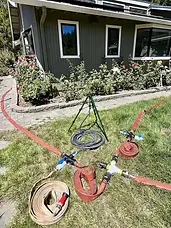
If you choose to go the way of DIY deployment and operation of a sprinkler system you'll save a lot of money. You'll also be taking on more risk. Deploying these systems takes time and sometimes fire does not allow for the time needed to set them up. Unless you are a fire professional, it is not recommended to stay and protect a home during a fire.
If you use these systems, consider setting them up when red flag days are predicted. Have them at the ready to activate should a fire breakout. That way, if they are setup during these times, you can just turn them on as you evacuate.
Smoke and Breathing/Exposure to Extreme Heat
Remember, firefighters are trained to fight fire and they are using PPE to assist in breathing as well as heat resistant clothing. Fighting a fire without these interventions can lead to injury or death. Exposure to smoke alone can cause extreme health consequences or death.
Water Supply
Your firefighting pump will only be as good as your water supply. If you only have municipal water available, then you might want to consider other options.
Firefighting Foam
Many fire agencies employ firefighting foam in their tactics toward fire suppression. The higher end exterior fire sprinkler installation companies incorporate foam as part of their systems in preventing ignition. There are additional home defense options available when it comes to firefighting foam.
Remote Controlled, Firefighting foam Application

Much Like Frontline Wildfire Defense, Citrotech is a premium option designed for defense of your entire property.
The system is a self-contained remotely activated sprinkler system that does not rely on
utilities outside of electricity. Each system is equipped with a tank of their Patented, EPA Safer Choice certified CitroTech® solution.

By routing copper or PVC pipes to sprinklers in locations determined by their Risk Assessment Team, CitroTech® can be deployed targeting nearby vegetation, in an effort to keep wildfire away from the home and reduce the risk of direct flame spread and ember attacks.
With these systems, there are two options for proactive wildfire defense
1. Roof Mounted Defense Systems
2. Perimeter Defense System
The main goal is to allow the customer to have peace of mind in deploying the systems allowing for home protection and safe evacuation.
DIY Foam Application
Firefighting foam is widely available for homeowners to purchase as a tool in protecting their homes against fire.


These products can be applied structures or foliage to protect against ignition, lasting for days. It's important to give yourself enough time to apply the product on your house or foliage. This is a DIY preventative measure and takes time to apply appropriately.
Fire foam/gel and the environment
Many firefighting gels and foams claim to be biodegradeable and safe for the environment. Make sure to do the research on any products you are considering for your home defense as no long-term studies have been conducted on firefighting foam. The application of any such products should be considered as a last resort in protecting your home against fire.
Exterior fire suppression systems
Pros and Cons
Pros
-
Enhanced Safety:
Provides an additional layer of protection by activating before or during a fire, slowing its spread and giving occupants more time to evacuate.
-
Reduces Property Damage:
Early suppression can significantly limit fire and smoke damage, potentially saving your home from catastrophic destruction.
-
Increases Property Value:
A property equipped with a reliable fire protection system is more attractive to potential buyers and can increase its overall value.
-
Insurance Benefits:
Insurers may offer reduced premiums for homes with active fire suppression systems.
-
Regulatory Compliance:
Installing a system can help meet local fire safety codes and regulations.
-
Peace of Mind:
Knowing your home is protected can provide significant peace of mind, especially in wildfire-prone areas.
Cons
-
High Upfront Costs:
The initial installation of a residential sprinkler system involves significant costs for the system itself, plumbing, backflow preventers, and potentially a stored water source or booster pump.
-
Ongoing Costs:
Regular inspection and maintenance are required to ensure the system is functioning correctly.
-
Risk of Water Damage:
Although less than from firefighting hoses, water damage can still occur if the system activates accidentally or in a way that is not contained.
-
Limited Effectiveness in Extreme Conditions:
During wildfires, high winds can reduce the effectiveness of sprinklers, and the system may not be effective if a neighboring structure is fully engulfed in flames.
-
Reliant on Water Supply:
The system requires a reliable and sufficient water supply, which can be a challenge in some locations.
-
Maintenance Challenges:
In colder climates, pipes can freeze and burst, leading to extensive water damage.
-
False Alarms/Malfunctions:
There's a potential for accidental system activation due to malfunctions, though modern systems are designed to prevent this.
On the Sci Fi End of Things

A sci-fi like product worth mentioning. that aids in the protection of of a structure against fire, is a self deployed aluminum foil sysyem called firefoil
Available as a whole house wrap or as custom sized, magnetically fastened window and door covers, this system claims to reflect 95% of radiant heat. For those with older homes with older windows, this could be a less expensive option to replacing window and doors.
Important caveat's to consider would be:
1. Takes time and effort to deploy
2. Does not protect against smoke
This system has been used and proven by fire professionals in defending large trees and historic structrures during a fire.


A Study in Defensible Building
The Vogts designed their Malibu house to withstand disasters. But they were only beginning to learn the mental toll the fires would take on them.
Urban Conflagaration
a "large, destructive fire that spreads beyond natural or artificial barriers; it can be expected to result in large monetary loss and may or may not include fatalities. An urban conflagration moves beyond a block and destroys whole sections of a city.
The Palisades and Eaton Fires Started as Wildfire but quickly became Urban Conflagrations. During an Urban Conflagration, the primary method of fire transmission is from house to house.
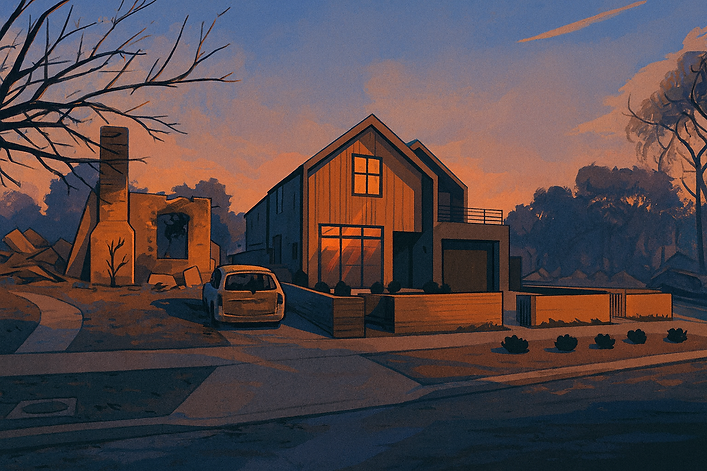
Homes that Survived vs Ones that Did Not
Because of current building codes and requirements, newer homes are built to be more resilient against fire. Newer designs build ember resistance into the construction and architecture of the home itself.
For those with older homes in the VHFHSZ, we take a look at homes that have survived wildfire and compare them to those that did not. The conclusions are never 100%. Fire is a force like that of a tornado. It can be unpredictable and can skip some homes, but not others.
Defensible space and home hardening provide the best chances for your home's survival. If you follow the basics(Roof, Eaves, Vent, Attic and Defensible Space) you are not only providing the best chance for your home's survival, but you are also creating space for firefighters to take a chance in saving your home.
In a large urban conflaguration, fire agencies are forced to pick and choose those structures that have the best chance for survival vs those that do not. Following the basics, will give your home the best chance possible.
House to House fire transmission
As with wildland fire, urban fire transmits through embers. Homes provide an abundant and long lasting fuel source in an urban conflagration. When ignited, homes can project embers as high as 100' and produce those embers for hours at a time as the home burns everything inside.
To protect a neighborhood, residents must work together to prevent fire spread from home to home.
Defensible space and home hardening are the most effective method in preventing fire transmission.

Brush Clearance
Brush clearance is the process of creating "defensible space" around homes and structures by removing dead, dry, and flammable vegetation, which helps to prevent and slow the spread of wildfires. The goal is to reduce the available fuel, limiting fire's ability to climb from the ground into trees and spread to structures.
Clearing brush is part of creating defensible space around your home and is required when living in the hills of Los Angeles County . It is one part of the entire equation. Intelligent landscape management is part of property resiliency to wildfire.
When beginning brush clearance at the end of every rainy season, here is a quick set of guidelines to help determine the scope of your project.
1. Trees touching/overhanging structure: Remove limbs within five feet
of any structure, and within 10 feet from any chimney outlet. Trim
trees up to six feet or one third their height.
2. Vines and climbing plants: Remove from all structures.
3. Hedges and screens between homes: Reduce and maintain to a height of no greater than eight feet. Remove them if they are within 5 feet of the home.
4. Remove large shrubs under windows.
5. Ground cover: Maintain at 18-inch maximum height.
6. Dead vegetation: Remove all dead material within 100 feet of
structures.
When it comes to fire, not all plants are created equal. It is encouraged, when possible, to consult an arborist or fire professional when trimming or removing trees and plants from around your home. Here are some of the most common types of vegetation found in our neighborhood and some guidelines on what to do with them when they are around your home.
Guidelines for Specific Plants
2. Junipers: Remove within 10 feet of any structure.

3. Bougainvillea: Remove from all structures.

4. Wisteria/Trumpet Vines/Creeping Fig, etc.: Remove from all structures.

5. Palms: All palm trees should be free of dead or dying fronds. Consider removing unmaintained trees.

6. Pines: Maintain all pines free of dead material.

1. Italian Cypress: Remove if the center of the trunk is within 10 feet of any structure.

Moisture level - the amount of moisture that a fuel source has. Live vegetation has more than dead vegetation. The amount of time between one rainy season to another will also affect the moisture level of live fuel sources. Super heated dry periods can "kiln dry" vegetation, killing it or pushing it into drought conditions.
Well hydrated vegetation can help protect your home. Take care of your trees and plants.
The Woolsey Fire - A Study in Defensible Space
The Woolsey Fire was a wildfire that started in Los Angeles County and spread north to neighboring Ventura County.The fire ignited on November 8, 2018, and was not fully contained until November 21, 2018. The fire burned 96,949 acres of land, destroyed 1,643 structures, killed three people, and prompted the evacuation of more than 295,000 people.

Before and after satellite images of one block in Malibu showed how many trees did not burn, when structures did. In fact, these pictures go further to show that when Zone Zero brush clearance protocols are observed, a home has a much higher chance of survival during a wildfire.

The homes that burned had vegetation within the Zone Zero defensible space. Even if the vegetation itself wasn't the cause for fire spread, the leaf litter contained within the vegetation would be the most likely culprit.
Starting in 2026 a new ordinance will go into effect that will govern what we can have around our homes in the VHFHSZ.
The Zone Zero Ordinance. What we know.
Originating from Assembly Bill 3074 (2020), the final rules are expected in 2025 from the state's Board of Forestry and Fire Protection, with enforcement starting on new construction and later for existing homes. The goal is to prevent home ignition from embers during wildfires, and property owners will need to replace combustible landscaping and materials with non-combustible alternatives like gravel or concrete within this zone.
Key Aspects of the Zone Zero Ordinance
-
Purpose: To create a fire-free perimeter around structures to stop embers from igniting a home.
-
Location: The rules apply to properties located in areas designated as "very high" fire hazard severity zones (FHSZ).
-
The Zone: A five-foot strip immediately surrounding a home.
-
What to Remove: All combustible materials within this zone, including:
-
Grass, weeds, and dead plants
-
Combustible mulches (bark, wood chips)
-
Eaves and branches within a specified distance from the roof and structure
-
Wooden fences or arbors attached to the home
-
-
What to Use Instead: Hardscaping, such as gravel, concrete, or pavers.
-
Exemptions: Potted plants in non-combustible containers and well-maintained mature trees can be exceptions under certain conditions.
Implementation Timeline
-
Law Enacted:
California Assembly Bill 3074 was passed in 2020.
-
Rule Finalization:
The final rules were expected before the end of 2025 from the Board of Forestry and Fire Protection.
-
Enforcement on New Construction:
Rules will likely take effect immediately upon the final approval of the regulations.
-
Enforcement on Existing Structures:
Property owners will have a grace period (expected to be three years) after the final rules are approved to comply with the new standards.
Home Hardening Products, Services, Brush Clearance, Risk Management Services, Home Firefighting
We've gone through the California Firesafe Council's vendor list and added the most pertinent one's to our site with links below. We've added some of our own as well. You can download the full California Firesafe Council's Vendor List below. A lot of the vendors on that list are for all California Ecosystems and may not apply to you and your property.
Gutter Guards
Ember Resistant Mesh
Fireproof Foundation Vents
Building Products
Fireproof Attic Vents
Whole House Wildfire Sprinkler Systems
Vegetation Fire Retardant Treatment
Fire Retardant
Wildfire Firefighting Carts
Whole Home Fireproof Wraps
Fire Resistant Paint
Alternatives to Wood Decking, Siding, Fencing
Property Assessment
Companies that do Home Hardening
Brush Clearance, Arbor Management and landscape design
Private Fire Brigade
Emergency Preparedness

Community Fire Hardening
The best way for our communities to withstand today’s reality of large, fast-moving wildfires is by working together. When neighbors join forces to harden their homes, create defensible space, and follow shared emergency plans, we greatly increase our collective chance of protecting our neighborhoods during a fire.
Here are some ways to get engaged and work with your neighbors to make your communities safer.
Our organization is made of many hillside communities, but we are always better together. Reach out and join forces with us so that we focus our efforts and talents towards improving the fire resilience of our hillside communities.
Become a Firewise Community
A Firewise Community is a neighborhood that takes organized, collective action to reduce its vulnerability to wildfire by implementing safer home construction, landscaping practices, and consistent property maintenance. It can be made up of 5-10 houses or more. This collaborative effort involves residents, local fire departments, and other authorities working together to create a safer environment and minimize home losses during wildfires.
How Firewise Communities Work
-
Action Plan:
Based on the assessment, the community develops a three-year action plan outlining specific measures to reduce wildfire risk, which can include community-wide projects and individual homeowner actions.
-
Education and Engagement:
The program emphasizes ongoing education and outreach to residents on wildfire prevention and preparedness, often through community work parties and awareness campaigns.
-
Recognition:
Communities receive Firewise USA® recognition for their efforts, which can provide benefits like free street signs and potential insurance discounts.
-
Annual Renewals:
To maintain their status, communities must submit annual renewals detailing their wildfire risk reduction activities.
-
Assessment:
Communities start by forming a volunteer board or committee and conducting a wildfire risk assessment to identify vulnerabilities and areas for improvement.
Benefits of Being a Firewise Community
-
Research shows that homes in Firewise communities are more likely to survive wildfires.
-
These communities provide a safer environment for firefighters to operate in when protecting homes.
-
Residents gain knowledge and tools to protect themselves and their properties from wildfire threats.
-
Homes within a recognized Firewise community may be considered more insurable and valuable.
Create a Chipper Days Program on your block or in your neighborhood
Chipper Days are community wood-chipping events organized by a city, fire-safe council, HOA, or local fire department to help residents reduce wildfire fuel. Here’s what they typically mean:
Purpose
-
Encourage homeowners to clear brush, tree limbs, and other vegetation from their property to create defensible space.
-
Provide a free or low-cost way to dispose of cut vegetation, so it doesn’t pile up or get burned.
-
Reduce the overall fuel load in a Very High Fire Hazard Severity Zone (VHFHSZ).
How It Works
-
Residents cut and stack branches, shrubs, and small trees on their property or at a pickup point.
-
A chipper crew comes on a scheduled day to grind the material into mulch.
-
Some programs offer curbside pickup, others have a drop-off site.
-
The mulch may be left with the homeowner (to use in landscaping) or hauled away.
Why It Matters in Fire-Prone Areas (like Hollywood Hills)
-
Cutting and removing ladder fuels and dead branches slows wildfire spread.
-
It’s easier and cheaper than hiring a private hauler.
-
Many insurance and fire-safety programs recommend or require it.
Create events or throw a Wildfire Awareness Week for your community.
Typical Goals
-
Teach residents how wildfires start and spread (wind- vs fuel-driven, ember showers, home ignition zones).
-
Show practical steps: hardening homes, clearing vegetation, preparing go-bags, evacuation planning.
-
Build neighborhood connections so people look out for one another before and during fire events.
-
Promote local resources (LA Fire Dept., Fire Safe Councils, Ready, Set, Go! programs, insurance updates).
Education & Demonstrations
-
Live ember storm demo (wind machine + glowing embers to show how vents and decks ignite).
-
Home hardening stations — samples of 1/8" mesh for vents, Class-A roof shingles, ember-resistant gutters.
-
Brush clearance how-to — what to cut, how far from structures, safe disposal.
-
Evacuation prep table — go-bag checklist, pet prep, water/backup power displays.
-
Insurance Q&A — wildfire coverage, mitigation discounts.
Services & Resources
-
Chipper Day tie-ins — sign-ups or vouchers for brush removal.
-
Fire department trucks on display (kids love it — great community builder).
-
Free smoke detectors / weather radios or ember-resistant vent covers.
-
Sign-ups for local emergency alerts (NotifyLA, ReadyLAFire).
Family & Community
-
Food trucks, coffee, music (often local bands).
-
Kids’ corner with coloring books (“Only You Can Prevent Wildfires” mascots).
-
Neighborhood history table (e.g., 1933 Griffith Park fire, local fire photos).
-
Raffles or giveaways (fire extinguishers, hose nozzles, vent screens).
-
Offer Prizes for Residents who have done the most in improving their property when it comes to fire.
Where & When They Happen
-
HOA clubhouses, fire stations, parks, or school lots.
-
Often tied to Wildfire Preparedness Week (May) or National Fire Prevention Week (October).
-
Organized by Fire Safe Councils, HOAs, local fire departments, city agencies, or neighborhood councils.
What Works Well
-
Visual, hands-on demos (residents remember seeing embers sucked into vents).
-
Localized maps showing evacuation routes, Very High Fire Hazard Severity Zones (VHFHSZ).
-
Personal stories from past fires — powerful motivator.
-
Community sign-ups for neighborhood watch/fire safety groups.
Some Notable Tech for Communities
From the Firesafe California vendor list, here are a couple of interesting products that could help your community in the event of a fire.
Wildfire detection for communities
Lindsey Firesense offers a fire ignition sensor that can detect and report a fire within 2 minutes of ignistion.
Each FIREBird device provides:
-
Continuous, 360-degree, monitoring provided by 14 wildfire-specific thermal detectors and optical cameras
-
2-minute detection-to-reporting time (typical)
-
Measurement of fire-critical weather data including windspeed, wind direction, temperature and humidity
-
Right-of-way condition monitoring
-
Self-contained cellular communications
-
Integrated web reporting

Community Emergency Planning
Equipped with unique experience in pre-fire and post-fire education, Blue Flamingo brings expertise in disaster + evacuation preparedness/ post-emergency communications/public outreach/vegetation management/ community education, and engagement. Strategy/Action Plans/Comm Plans/Print/ Digital/Social/Reporting. Award-winning, state-recognized public education programs. We help you secure and maintain funding.

The Waldo Canyon Fire - a study of pre-fire mitigation and it's effectiveness
The Waldo Canyon Fire was a destructive, human-caused wildfire in June 2012 that burned 18,247 acres in Colorado Springs, destroying 346 homes, killing two people, and forcing the evacuation of over 32,000 people. It was the first opportunity to do a post-fire study of a fire-adapted community.
Cedar Heights was the most successful neighborhood in pre-fire mitigation during the Waldo Canyon Fire. While other areas suffered significant losses, no homes were destroyed in Cedar Heights due to proactive, multi-faceted fire prevention strategies.
Key mitigation factors in Cedar Heights included:
-
Creating a firebreak: The community created an 80-foot fuel buffer by removing vegetation and establishing a firebreak on its perimeter. This separation effectively stopped the fire from spreading into the community.
-
Fuel reduction and defensible space: The community and individual homeowners focused on thinning scrub oak, trimming low tree branches, and creating defensible space around structures. The city's wildfire mitigation program was instrumental in assisting residents with these efforts.
-
Community-wide coordination: The success was a direct result of strong cooperation and communication between residents, fire officials, and local government. An informed and active community that shared responsibility for mitigation was a primary element of success.
Financial Factors
At a cost benefit ratio of 1/257 $300,000 was spent on mitigation and $77,248,301 in losses was avoided.
Success was only possible because pre-fire mitigation was conducted at the individual and community levels.
For details on home hardening and pre-fire mitigation, The Waldo Canyon Summary is a fantastic resource for further reading on what this post fire study revealed.
Home Insurance
CSAA / AAA Home Insurance
-
Offers a "Fortify Your Residence" discount up to 15% for comprehensive wildfire-hardening efforts.
-
Alternatively, a "Fortify Your Residence Lite" discount of 5% is available for partial mitigation efforts.
-
You can also get a "Fortify Your Community" discount of 5% if your community qualifies (e.g., Firewise USA Site). These can stack, so reaching a combined total of up to 20% is plausible.CSAA Insurance
From October 10, 2025 onward, the program transitions to “My Home Hardening Discount,” up to 12.5%, tied to Department of Insurance and IBHS guidelines.CSAA Insurance
California FAIR Plan
-
As the insurer of last resort, FAIR Plan now offers structured discounts:
-
Up to 5% for immediate surroundings protection (defensible space, ember zone).
-
10% for structural hardening (Class A roofing, fire-resistant vents, multi-pane windows, etc.).
-
10% if your home is in a recognized Firewise USA Community.
-
You could potentially stack these for a total discount of up to 24.5% on your dwelling fire premium.
What You Can Do Next
-
Assess Your Current Insurance
-
Contact your provider or agent to find out if you qualify for any existing wildfire mitigation discounts.
-
Ask for your wildfire risk score and what specific upgrades would help reduce it.
-
-
Consider Your Coverage Options
-
If you're with the FAIR Plan, work with your broker to apply for the up-to-24.5% discount opportunities.
-
If you're looking for new coverage, CSAA / AAA could offer generous discounts if your property and community meet the criteria.
-
-
Document Your Upgrades
-
Keep photos, invoices, or certifications of any mitigation actions—these will be essential for claiming discounts.
-
-
Build Community Resilience
-
Joining or forming a Firewise USA Community can not only increase safety but also unlock additional insurance savings.
-
The Trauma of Losing Everything
When it comes to hardening your home and creating defensible space on your property many people might prefer to take their chances in order to live in the lush landcaping they have created for their home. Home hardening and defensible space creation is the best chance for your home surviving wildfire. Perhaps you have insurance and know that you can rebuild, so the financial aspect of losing your home is taken care of. I would implore you to consider the emotional trauma of losing your home, uprooting your life and trying to rebuild. In our neighborhood, new construction will never be the same as many of the historic homes we own. New construction will be required to comply with newer building codes, zone zero defensible space and fire hardened vegetation. Insurance premiums could be unaffordable in an area devastated by wildfire. What will your property be worth then? If our communities can work together to create safer neighborhoods for fire, insurance companies and firefighters might just see that we are worth the risk of insuring or worth risking their lives to save. Investing in fire hardening your home over the next three years could save you the trauma of losing everything.